Garage Door Repair in North Atlanta, GA
When your garage door quits working in North Atlanta, the clock starts immediately — a door stuck open is a security exposure, and a door stuck closed means you’re blocked in or out. Garage door repair in North Atlanta typically runs $150–$600 depending on the problem, and Anthony Caprece and his crew at Liberty Garage Door Solutions Atlanta are set up to respond the same day for most North Atlanta addresses. Call (470) 819-5424 right now for a free, no-pressure estimate — we’ll tell you exactly what’s wrong and what it costs before we touch anything.
Why Liberty Garage Door Solutions Atlanta Is North Atlanta’s Preferred Garage Door Repair Company
Anthony Caprece built Liberty Garage Door Solutions on a straightforward idea: when a homeowner in North Atlanta calls, they should get the specialist who actually knows garage doors — not a dispatch center routing a generalist. Anthony is both the owner and the lead technician, which means the person who staked his name on this business is often the person pulling into your driveway. That direct accountability is something a franchise model structurally can’t offer, and it shows in how jobs get handled here.
Nearly 700 verified five-star reviews — 678 averaging 4.9 stars — reflect nine years of consistent, repeat-worthy work across Atlanta’s northside. Those aren’t a handful of handpicked testimonials; they’re hundreds of real homeowners who called back, or sent a neighbor. Our Garage Door Repair team knows the specific door problems that come with North Atlanta’s housing stock, from the tight headroom on postwar Ashford Park ranches to the oversized custom carriage doors going up on Buckhead teardown rebuilds along Peachtree Boulevard.
Serving North Atlanta and the 30319 corridor means we’re familiar with exactly how long it takes to reach addresses off Clairmont Road Northeast or near Chastain Memorial Park — same-day arrival isn’t a marketing phrase here, it’s how we’re actually scheduled.
Our Garage Door Repair Services in North Atlanta
Panel Replacement
Panel damage in North Atlanta comes with a distinct local cause that doesn’t show up as often elsewhere: the extraordinarily dense hardwood canopy throughout Buckhead and Brookwood Hills drops limbs — sometimes heavy ones — directly onto garage doors. Mature oaks and tulip poplars that have survived decades of development turn a typical storm into a panel replacement call. A typical panel replacement in North Atlanta runs $250–$500, and we carry sections compatible with Clopay, Amarr, and Wayne Dalton systems, which are especially common in the newer construction replacing those teardowns along the Peachtree Boulevard corridor.
Spring Repair
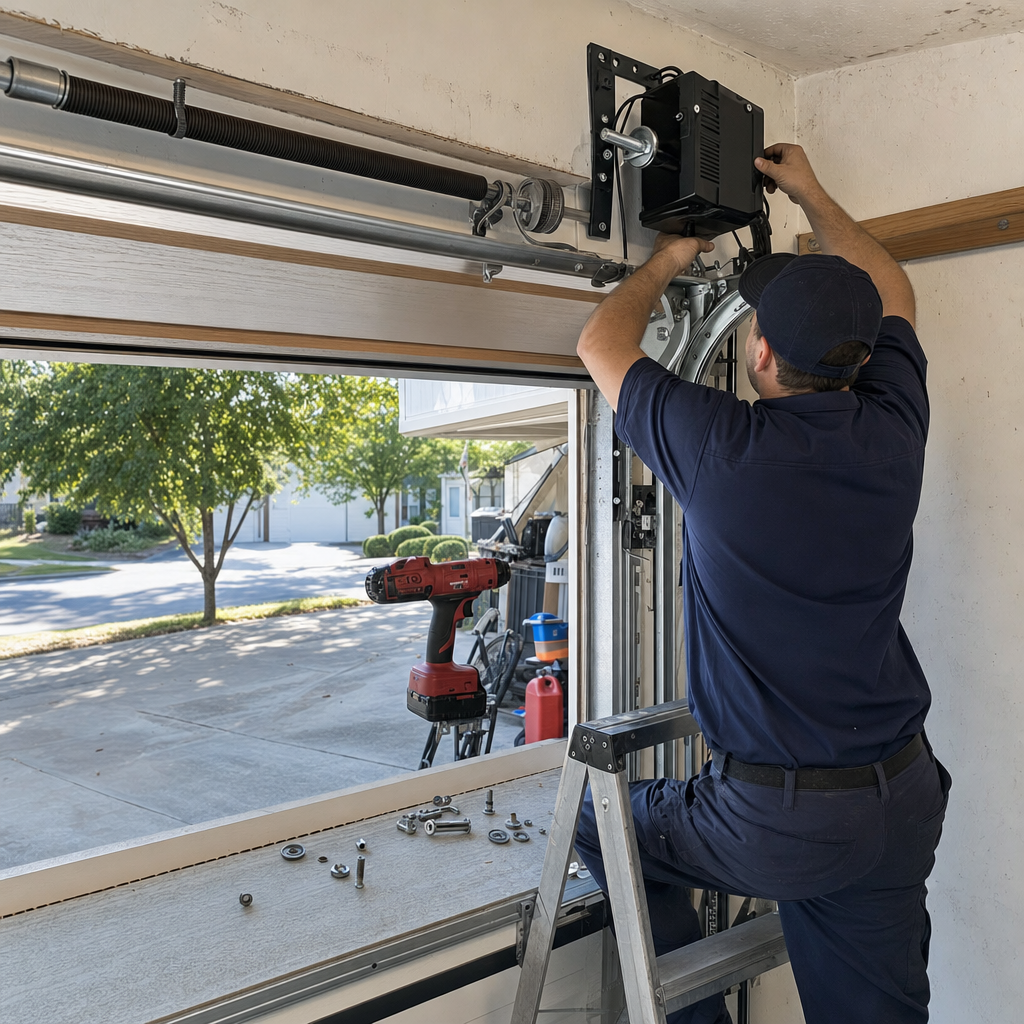
Torsion spring failures are the single most common emergency call we receive from North Atlanta homeowners, and the timing is predictable: metro Atlanta’s periodic winter ice events — wet freezing rain rather than dry snow — cause rubber bottom seals to bond to concrete overnight. When someone forces the door open the next morning, the sudden shock load snaps a spring that was already fatigued. We see this pattern spike along Clairmont Road and Peachtree Road Northeast after every significant ice event. Spring repair in North Atlanta runs $180–$340, and we replace springs in matched pairs using load calculations calibrated to your specific door weight — including the heavier custom doors on new Buckhead builds that require spring sizing far outside standard residential charts.
Cable Repair
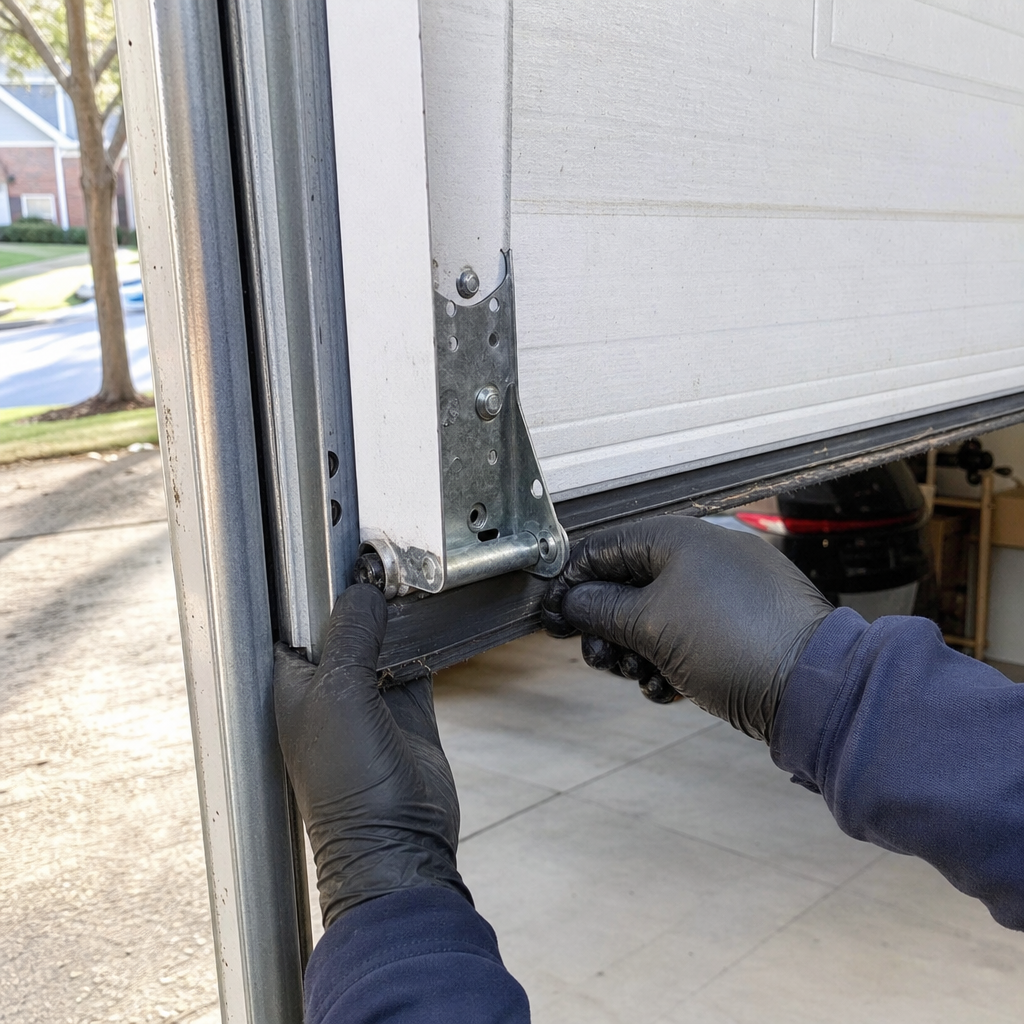
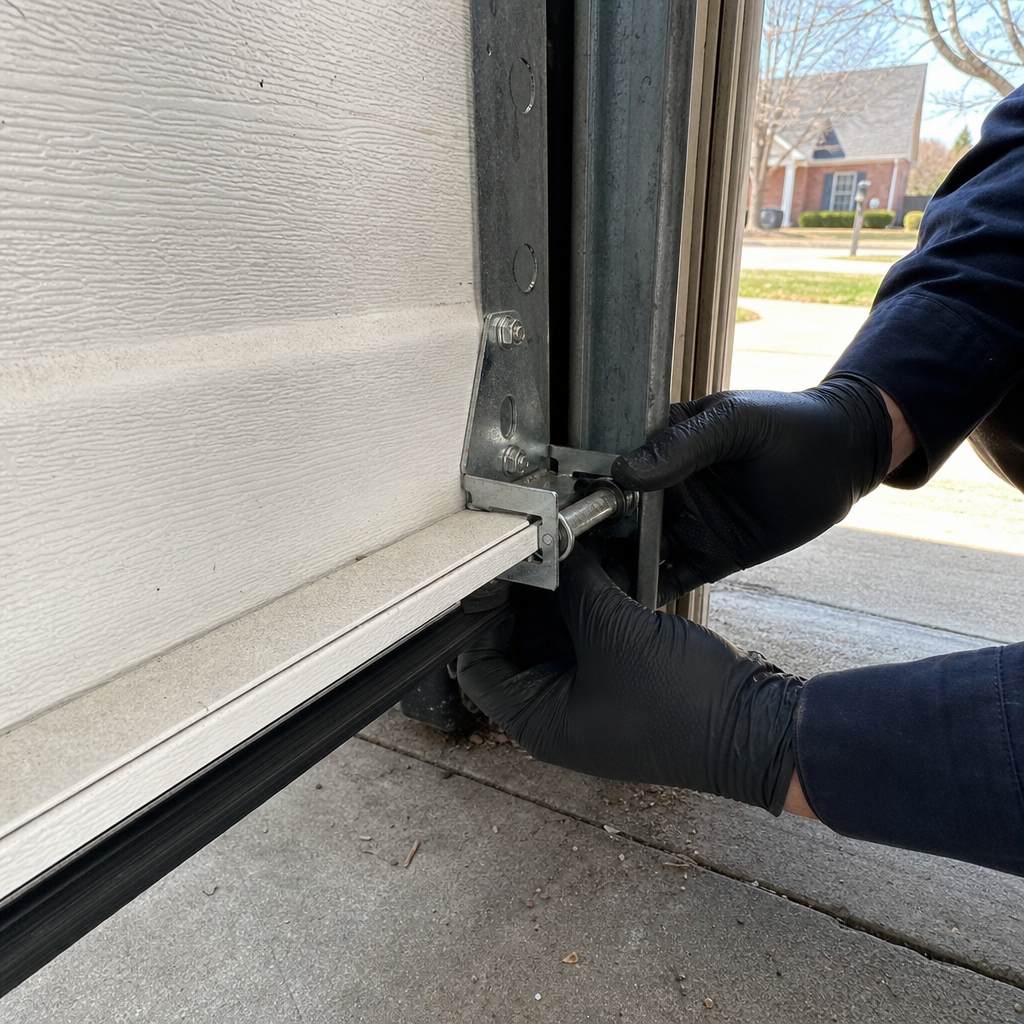
A broken or frayed lift cable leaves your door tilted, unbalanced, and unsafe to operate — and in North Atlanta’s tree-dense neighborhoods, the added stress of debris-loaded bottom tracks accelerates cable wear faster than homeowners expect. Compacted leaf litter jammed between the door bottom and the threshold creates resistance the cables have to compensate for on every cycle, which shortens their service life. Cable repair in North Atlanta typically costs $130–$250, and we inspect the drum, cable anchor, and bottom bracket as a unit so we’re not leaving a secondary failure waiting to happen.
Track Realignment
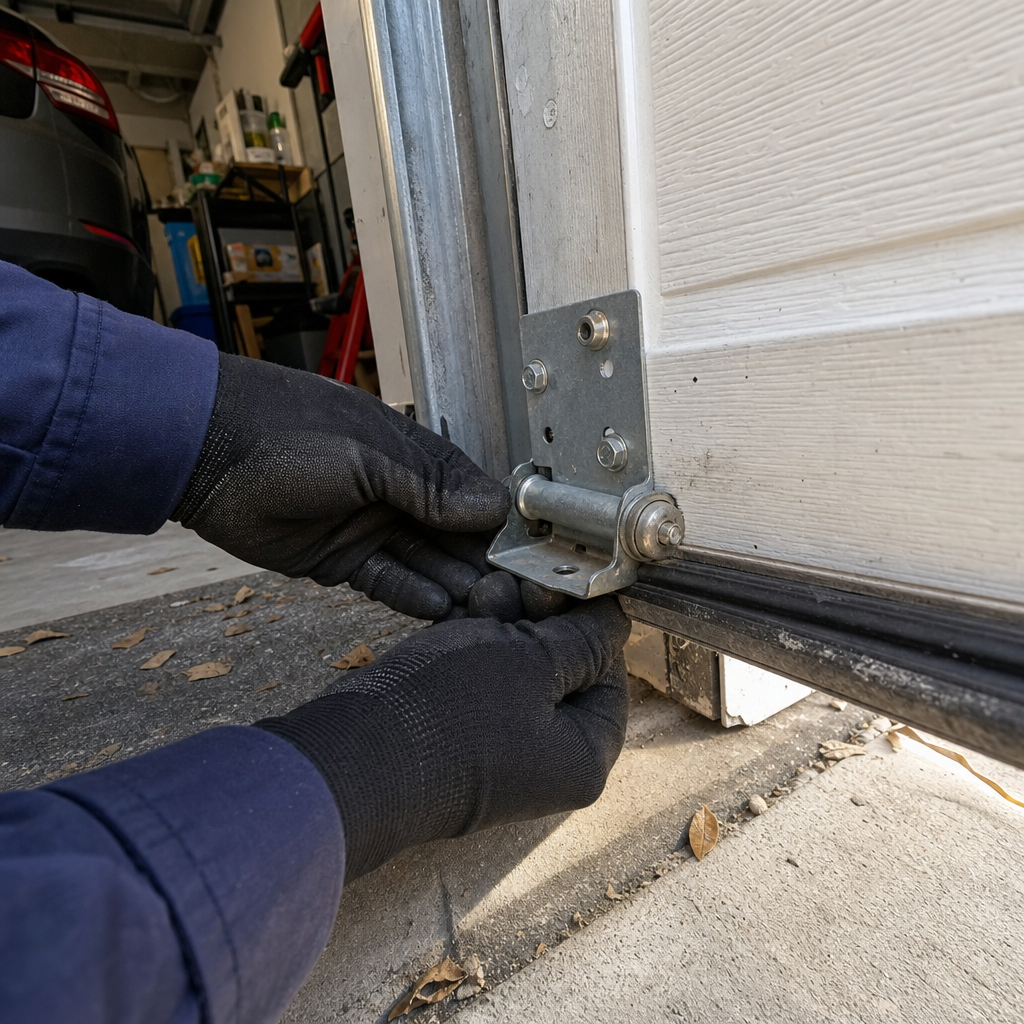
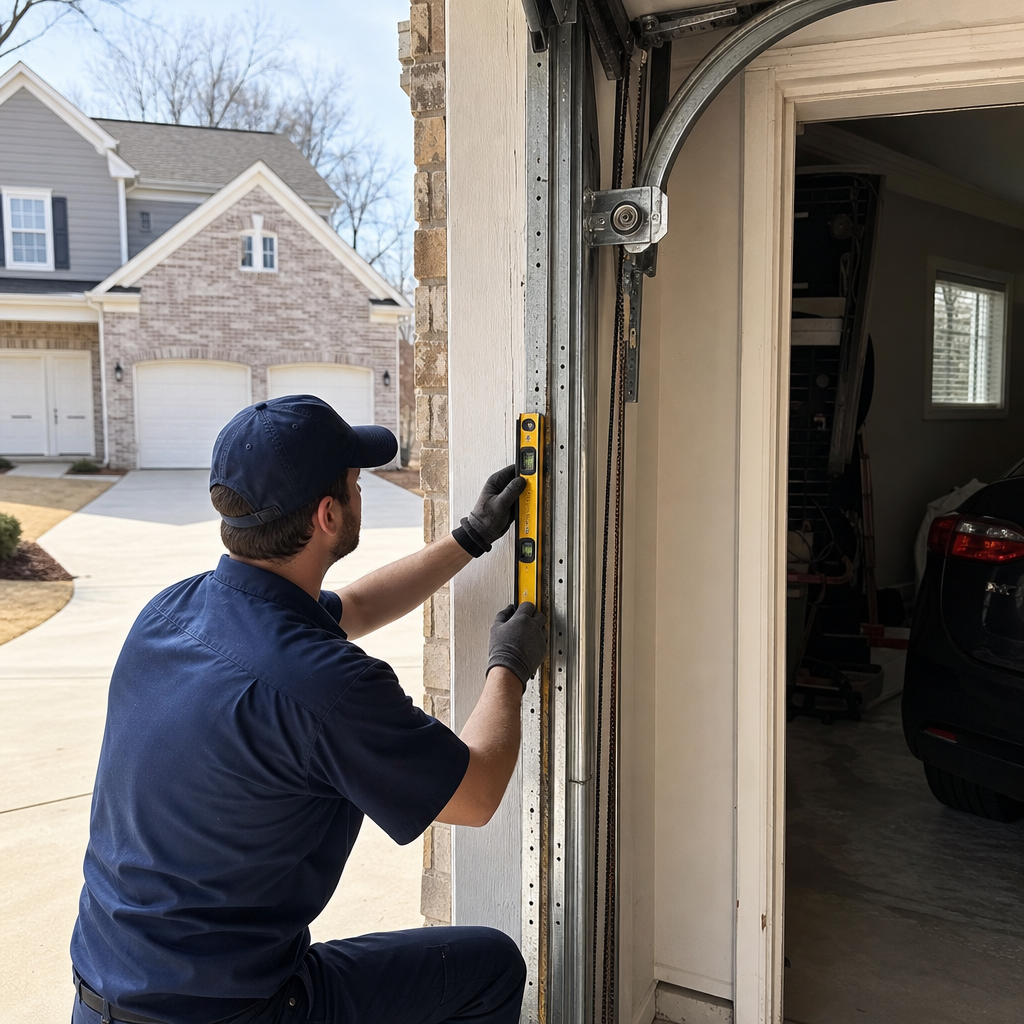
The dominant postwar ranch and split-level homes in Embry Hills, Cambridge Estates, and Ashford Park were built with minimal garage headroom and narrow single-car bays — specs that make track installation and realignment tighter work than in a modern two-car garage. When a track bends or pulls away from the wall in one of these homes, there’s very little margin for error during the repair. Track realignment in North Atlanta runs $120–$240, and our technicians are experienced in working within the low-clearance constraints that these mid-century openings impose, rather than recommending an unnecessary full replacement when a precise realignment will restore smooth operation.

What happens when you call
- 1
A real person answersNo phone trees — you reach a local pro.
- 2
You get an upfront price rangeHonest numbers before anyone is dispatched.
- 3
A background-checked tech heads outLicensed & insured, dispatched right away.
- 4
You approve before work beginsNothing starts until you say go.
Additional Services We Offer in North Atlanta
- Roller Replacement — Worn or cracked rollers cause grinding noise and uneven travel. Roller replacement in North Atlanta runs $110–$220.
- Sensor Calibration — Misaligned safety sensors stop your door mid-cycle or prevent closing entirely. We recalibrate and align sensors on any opener system.
- Opener Repair & Installation — Opener repair in North Atlanta typically costs $120–$320; opener installation runs $250–$550 depending on drive type and horsepower.
- Emergency Garage Door Service — A door stuck open overnight is a security situation, not a scheduling inconvenience. Emergency response is a core part of what we do, available when you need it.
Trusted Brands We Service in North Atlanta
Anthony and his team are factory-familiar with eight major brands: LiftMaster, Chamberlain, Genie, Clopay, Amarr, Wayne Dalton, Craftsman, and Raynor. That matters in North Atlanta because the housing mix here means we’re working on everything from a 1960s Craftsman opener in an Ashford Park ranch to a new LiftMaster 8500W wall-mount system in a Buckhead custom build — often in the same afternoon. We stock commonly needed parts for these brands, which means most North Atlanta repairs clear in a single visit rather than waiting on a shipped component.
Common Garage Door Repair Problems We See in North Atlanta Homes
- Ice-event spring failures on Clairmont Road and Peachtree Road corridors: Atlanta’s wet winter freezes bond door seals to the concrete slab overnight. Homeowners forcing the door open in the morning snap fatigued torsion springs — a failure mode that spikes predictably after each ice event and is the top emergency call we receive from the 30319 zip code.
- Falling limb and leaf-debris damage in Buckhead and Brookwood Hills: The mature hardwood canopy overhanging driveways in these neighborhoods makes storm damage a regular service call. Limb strikes dent or crack panels, and compacted leaf debris in the bottom track creates resistance that wears rollers, cables, and springs faster than normal cycle counts would predict.
- Narrow-bay retrofitting issues in Embry Hills and Cambridge Estates ranches: The original 8- and 9-foot single-car openings in these 1950s–1970s homes weren’t designed for modern door systems. Retrofitting a low-clearance opener or wider door section into these bays requires careful measurement and often custom bracket work — homeowners who bought a big-box opener expecting a straightforward swap frequently run into this problem.
- Summer wood-swelling on carriage doors throughout Buckhead estates: Metro Atlanta’s high summer humidity causes wood-panel carriage doors — common on the older estate homes in Buckhead — to absorb moisture, swell, and bind in their tracks. Uncoated torsion springs in the same high-humidity environment also rust through faster than homeowners in drier climates expect, often failing without visible warning.
The North Atlanta Dual-Market Reality: Why This Area Is Different
North Atlanta’s 30319 corridor presents two entirely different job profiles that can exist on the same street. On one end, the luxury teardown-and-rebuild wave in Buckhead and Brookwood Hills is driving demand for custom oversized carriage-house and full-view glass-panel doors on new construction — doors that routinely stand 10 feet tall and require spring calculations that fall well outside standard residential charts. On the other end, the surviving 1950s–1970s ranch and split-level stock in Embry Hills and Cambridge Estates still carries original 8- or 9-foot single-car openings that are too narrow for a modern SUV. This inside-the-Perimeter tension — prestige new construction butting up against modest postwar suburbs — shapes nearly every sales and repair conversation we have in North Atlanta, and it’s exactly why a specialist with nine years of focused experience handles these calls better than a general handyman who picks up a garage door job occasionally.
Pricing for Garage Door Repair in North Atlanta, GA
Most garage door repairs in North Atlanta fall between $150 and $600. Here’s how the specific services break down:
| Service | Typical Range in North Atlanta |
|---|---|
| Spring Repair | $180–$340 |
| Cable Repair | $130–$250 |
| Panel Replacement | $250–$500 |
| Track Realignment | $120–$240 |
| Roller Replacement | $110–$220 |
| Opener Repair | $120–$320 |
| Opener Installation | $250–$550 |
| New Door Installation | $700–$2,200 |
What moves the number within those ranges: door weight and height (the oversized doors on Buckhead new construction cost more to spring correctly), brand-specific parts availability, and whether the job reveals a secondary issue like a worn drum or damaged bottom bracket. Estimates are always free, always given upfront, and nothing starts until you’ve approved it. Call (470) 819-5424 and we’ll give you a real number in minutes.
We Also Serve Cities Near North Atlanta
Beyond North Atlanta, Anthony and his team regularly serve homeowners in Brookhaven, North Druid Hills, Sandy Springs, and Vinings. If you’re just outside the 30319 area along the Northeast Expressway or on the other side of the Atlanta Bypass, we’re still your call — same response expectations, same upfront pricing, same accountability. Call (470) 819-5424 to confirm coverage for your specific address.
Serving North Atlanta, GA — Our Local Coverage Area
We’re based in the North Atlanta area and know this community well. Use the map below to see our service coverage — if you’re nearby, we can almost certainly help.
FAQs — Garage Door Repair in North Atlanta
Same-day service is available for most North Atlanta addresses, including homes off Clairmont Road, near Chastain Memorial Park, and throughout the 30319 zip code. Our scheduling is built around North Atlanta being a primary service area, not an outlying stop. Call (470) 819-5424 early in the day and we’ll give you a same-day window more often than not.
Yes — we cover all North Atlanta neighborhoods, including Buckhead, Brookwood Hills, Ashford Park, Embry Hills, and Cambridge Estates, as well as properties along Peachtree Boulevard and the Clairmont Road Northeast corridor. If you’re inside or near the 30319 zip code, you’re firmly within our service area. Call to confirm your specific address if you’re on the edge of a neighboring zone.
Emergency garage door service is an active, core offering — not an afterthought. A door stuck open overnight in Buckhead or anywhere in North Atlanta is a security situation that can’t wait until a convenient scheduling slot. Call (470) 819-5424 and describe what’s happening; we’ll tell you honestly whether it qualifies as an emergency response and what to expect.
Pricing in North Atlanta is consistent with our Atlanta-area rates — spring repair runs $180–$340, cable repair runs $130–$250, and panel replacement runs $250–$500. What can push a North Atlanta job toward the higher end of any range is the complexity specific to this market: oversized custom doors on Buckhead new construction require non-standard spring sizing, and the tight headroom in postwar Embry Hills ranches adds labor time. You’ll get the exact number before we start. Call (470) 819-5424 for a free estimate.
We stand behind the work we do in North Atlanta — parts and labor are covered, and if something we repaired fails, we come back. Anthony’s name is on every job, which means warranty calls aren’t shuffled to a different crew; the same accountability that got the job done correctly the first time handles any follow-up. Ask us about the specific warranty terms for your repair when you call (470) 819-5424.
Reviewed by Anthony Caprece, Owner & Lead Technician at Liberty Garage Door Solutions Atlanta, serving North Atlanta and the greater Atlanta area for 9+ years.