Garage Door Repair in North Druid Hills, GA
Garage door repair in North Druid Hills, GA typically runs $150–$600 depending on what’s failed — springs, cables, panels, or sensors — and Anthony Caprece’s crew at Liberty Garage Door Solutions Atlanta responds fast to the 30329 zip code, often the same day you call. If your door stopped moving this morning, call (470) 819-5424 now for a free estimate and an honest diagnosis from a specialist who has worked on dozens of North Druid Hills homes. Garage doors are all we do — not a side service, not a upsell from a bigger job.
Why Liberty Garage Door Solutions Atlanta Is North Druid Hills’s Preferred Garage Door Repair Company
North Druid Hills homeowners searching for reliable repair quickly discover that most options are either anonymous franchise dispatchers or general handymen who treat garage doors as an afterthought. Our Garage Door Repair team is built differently — Anthony Caprece, the owner, is regularly the technician stepping out of the van at your driveway. That direct accountability means no phone-tag, no miscommunication, and no junior tech improvising on your equipment.
With 678 verified reviews averaging 4.9 stars, Liberty Garage Door Solutions has built one of the strongest track records in the trade across metro Atlanta. We’ve earned that reputation one job at a time in communities like North Druid Hills, where word travels fast and neighbors talk. When you see the same name on hundreds of five-star reviews, that’s not luck — it’s a pattern built on showing up, diagnosing correctly the first time, and standing behind the work.
Our Garage Door Repair Services in North Druid Hills
Panel Replacement
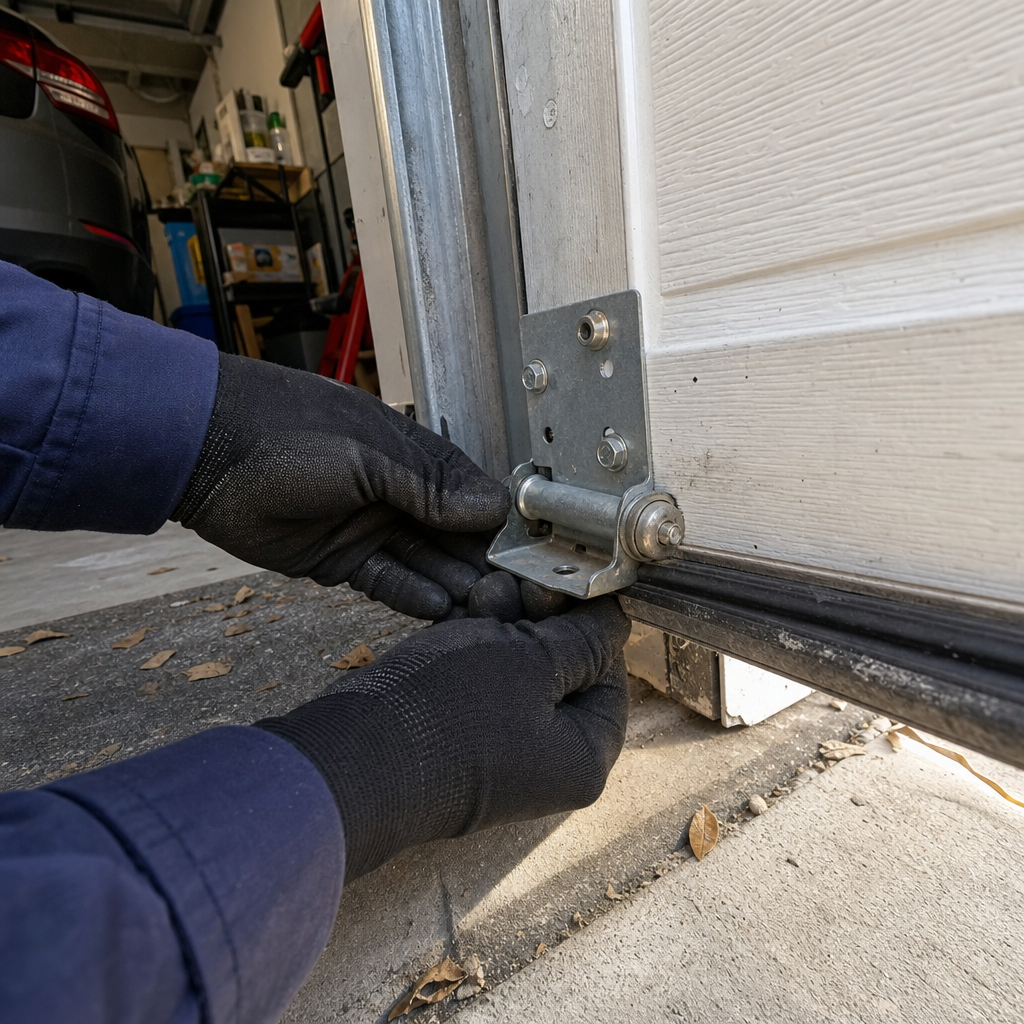
Panel replacement in North Druid Hills runs $250–$500 for most residential jobs. The mid-century ranch and split-level homes throughout the 30329 area often carry original steel panels that have spent decades in Atlanta’s humid subtropical air — surface rust, hinge fatigue, and denting from driveway accidents are the most frequent reasons we’re called out. We work with Clopay, Amarr, and Wayne Dalton panel sections and can usually match the existing door’s profile so you’re not forced into a full replacement when a single damaged section is the real problem.
Spring Repair
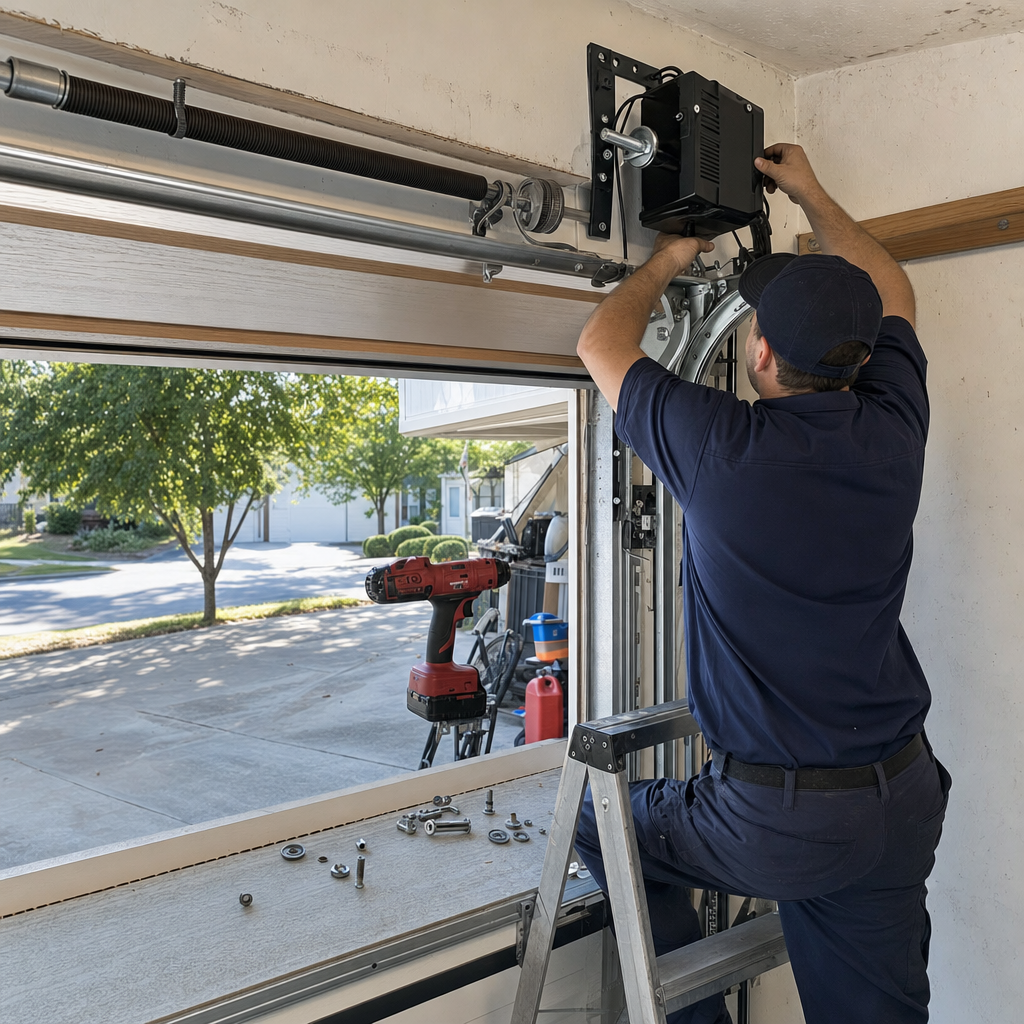
A typical spring repair in North Druid Hills costs $180–$340, depending on whether you have a torsion or extension spring system and whether both springs need replacing. The spring hardware on many 1960s and 1970s ranch homes in this neighborhood is original or first-generation replacement — decades of Atlanta humidity accelerate metal fatigue far faster than the spring’s cycle rating suggests. We stock high-cycle torsion springs on the truck and carry LiftMaster and Genie-compatible hardware, so most spring repairs are completed in a single visit without ordering parts.
Cable Repair
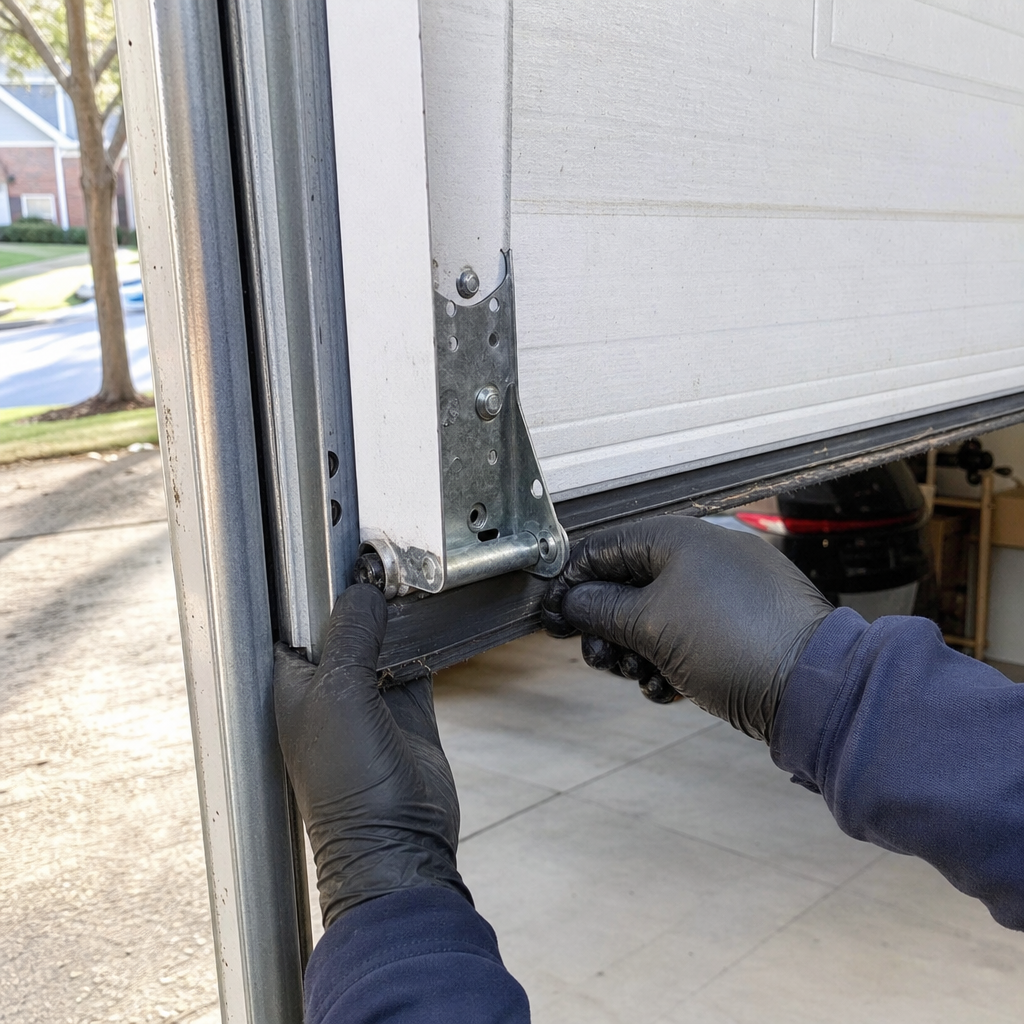
Cable repair in North Druid Hills runs $130–$250 and is one of the more urgent repairs on our list — a snapped cable lets one side of the door drop unevenly, and forcing the opener against an unbalanced door damages the operator within minutes. North Druid Hills’s periodic winter ice events are a particular culprit here: freezing rain bonds door bottom seals to concrete slabs overnight, and when homeowners force the door open before the ice releases, the sudden resistance snaps cables that were already fatigued from years of humidity corrosion. Anthony’s crew replaces cables with galvanized aircraft-grade wire rated well above residential load requirements.
Track Realignment
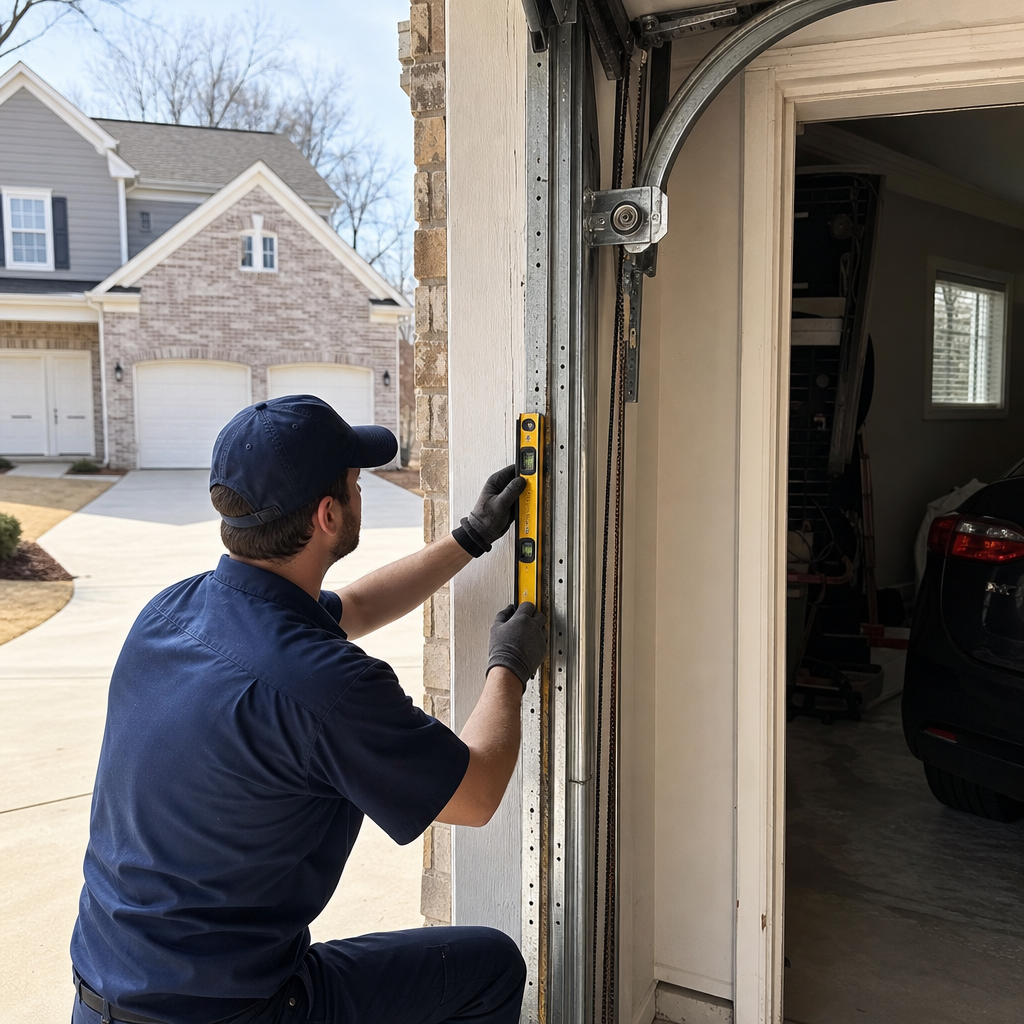
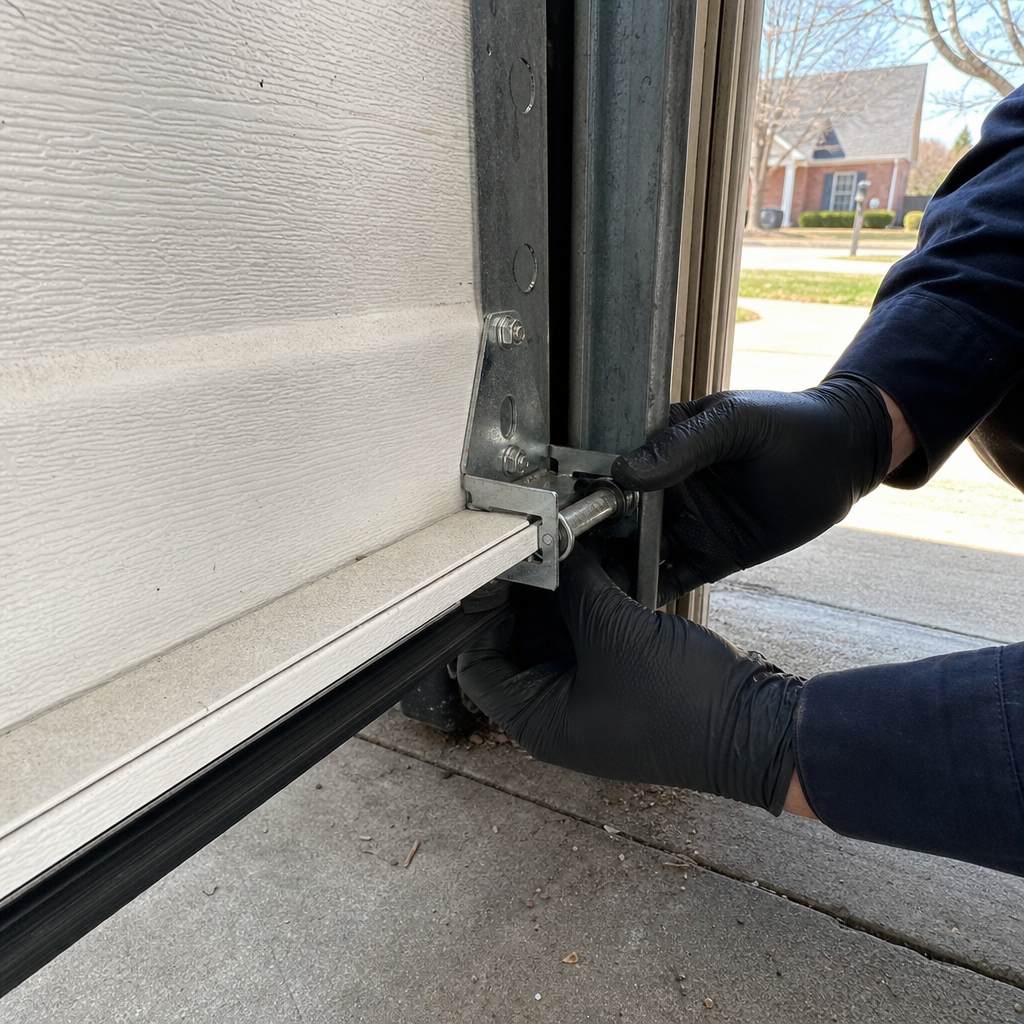
Track realignment in North Druid Hills typically costs $120–$240. The 8–9-foot single-car track systems installed in this neighborhood’s original construction were sized for vehicles that no longer match what most families drive — modern SUVs and crossovers sit taller and wider, and the door rollers tracking against bent or narrowed rails cause grinding noise and eventual derailment. Beyond vehicle clearance issues, storm debris falling from North Druid Hills’s dense oak and sweetgum canopy routinely lands inside open track channels and bends vertical sections. We straighten, re-secure, and lubricate the full track system in most visits without needing to order replacement hardware.
What happens when you call
- 1
A real person answersNo phone trees — you reach a local pro.
- 2
You get an upfront price rangeHonest numbers before anyone is dispatched.
- 3
A background-checked tech heads outLicensed & insured, dispatched right away.
- 4
You approve before work beginsNothing starts until you say go.
Trusted Brands We Service in North Druid Hills
Anthony and his team are factory-familiar with eight major brands: LiftMaster, Chamberlain, Genie, Clopay, Amarr, Wayne Dalton, Craftsman, and Raynor. That range matters in North Druid Hills, where homes from the 1950s through the 1970s may be running three different generations of opener hardware — a Craftsman chain-drive from the 1990s, a Chamberlain belt-drive added in the 2000s, or a Genie screw-drive installed last decade. We carry replacement parts for all eight brands on the truck, which keeps parts-sourcing delays out of the equation and gets your door running the same day we arrive.

Common Garage Door Repair Problems We See in North Druid Hills Homes
- Photo-eye sensor blockage from leaf and debris accumulation: North Druid Hills sits beneath one of metro Atlanta’s densest mature residential tree canopies, and the constant fall of oak leaves, acorns, and sweetgum balls blocks ground-level photo-eye sensors several times a season. Many residents call believing their opener has failed when the real fix is clearing tannin-coated residue off the sensor lens — a pattern we diagnose in North Druid Hills far more often than in less-wooded nearby zip codes.
- Spring and cable failure on original mid-century hardware: The spring and cable systems on 1950s–1970s ranch homes throughout the 30329 area were frequently never upgraded, leaving hardware that has cycled well past its rated lifespan. Atlanta’s year-round humidity accelerates metal corrosion, so fatigue failures show up earlier than the same components would fail in a drier climate — typically presenting as a door that feels unusually heavy or drops one side before the hardware snaps entirely.
- Ice-bonded door seals stressing openers and brackets: North Druid Hills experiences freezing rain rather than heavy snow during winter cold snaps, and the resulting ice layer bonds rubber bottom seals to concrete slabs overnight. Homeowners who press the wall button before the seal releases put serious strain on the opener motor and bottom brackets — we see this failure pattern every January and February, sometimes as a cascade where the seal tear, bracket bend, and opener overload all need addressing together.
- Undersized openings requiring header modifications: The original 8–9-foot single-car openings common in North Druid Hills’s housing stock are undersized for modern SUVs, and track hardware installed for those narrower doors can’t accommodate the taller, wider clearance modern vehicles need. This drives a steady stream of header modification and wider door retrofit requests — work that needs to permit through DeKalb County rather than the City of Atlanta, a detail that Atlanta-based contractors who don’t know this pocket often get wrong, causing permit delays and inspection problems for homeowners.
Pricing for Garage Door Repair in North Druid Hills, GA
Most garage door repairs in North Druid Hills fall within the $150–$600 range, with the specific cost driven by which component failed, whether parts need sourcing beyond what’s on the truck, and whether the job involves North Druid Hills’s older track or hardware configurations. Here’s a quick reference for the most common repair categories:
- Spring Repair: $180–$340
- Cable Repair: $130–$250
- Panel Replacement: $250–$500
- Track Realignment: $120–$240
- Roller Replacement: $110–$220
- Sensor Calibration: included in diagnostic visit for most jobs
Every visit starts with a free, upfront estimate — no surprise charges after the work is done. If a repair turns out to cost more than expected mid-job, Anthony will stop and explain why before proceeding. Call (470) 819-5424 to schedule your free estimate today.
We Also Serve Cities Near North Druid Hills
Along with North Druid Hills, Liberty Garage Door Solutions Atlanta regularly services homeowners in Brookhaven, North Atlanta, Sandy Springs, and Vinings. If you’re in one of these communities and need the same specialist-level service your neighbors in North Druid Hills rely on, we’re already running routes nearby and can typically reach you the same day. Call (470) 819-5424 to confirm availability in your area.
Serving North Druid Hills, GA — Our Local Coverage Area
We’re based in the North Druid Hills area and know this community well. Use the map below to see our service coverage — if you’re nearby, we can almost certainly help.
FAQs — Garage Door Repair in North Druid Hills
We offer same-day service to North Druid Hills and can typically reach the 30329 zip code within a few hours of your call on most days. For urgent situations — a door stuck open overnight, a snapped spring blocking your vehicle — emergency service is a core part of what we do, not an add-on. Call (470) 819-5424 and we’ll give you an honest arrival window right on the phone.
Yes — we service the full North Druid Hills area, including the ranch and split-level neighborhoods along North Druid Hills Road, Briarcliff Road, and the residential streets feeding into the 30329 zip code. We’re familiar with the housing stock and the permit routing through DeKalb County that some out-of-area contractors miss. If you’re unsure whether your address falls in our service area, one call to (470) 819-5424 will confirm it immediately.
Emergency service is available for North Druid Hills residents — a door that won’t close is a security exposure, and we treat those calls with the urgency they deserve. Anthony and his team understand that waiting until the next business day isn’t always a reasonable ask, especially when a broken spring or snapped cable leaves your garage fully open. Call (470) 819-5424 and we’ll assess how fast we can get to you.
Pricing for North Druid Hills is consistent with the broader Atlanta market — spring repair runs $180–$340, cable repair $130–$250, and panel replacement $250–$500, regardless of whether the job is in North Druid Hills, Brookhaven, or Sandy Springs. The one variable specific to North Druid Hills is that header modification and wider-opening retrofits on older ranch homes carry additional permit costs routed through DeKalb County rather than the City of Atlanta, which affects total project cost on those jobs. For a precise number on your specific repair, call (470) 819-5424 — the estimate is free.
Liberty Garage Door Solutions stands behind every repair with a workmanship warranty, and the parts we install carry manufacturer warranties that we pass directly to you. Because Anthony is the owner and often the technician on your job, there’s no franchisee buffer if something needs revisiting — you call the same number and the same person is accountable. Ask about specific warranty terms when you book; the details vary by part type and brand, and we’ll lay them out clearly before we start work.
Reviewed by Anthony Caprece, Owner & Lead Technician at Liberty Garage Door Solutions Atlanta, serving North Druid Hills and the greater Atlanta area for 9+ years.